Iran's Supreme Leader Khamenei Dies After US-Israel Attack: A Region on Edge
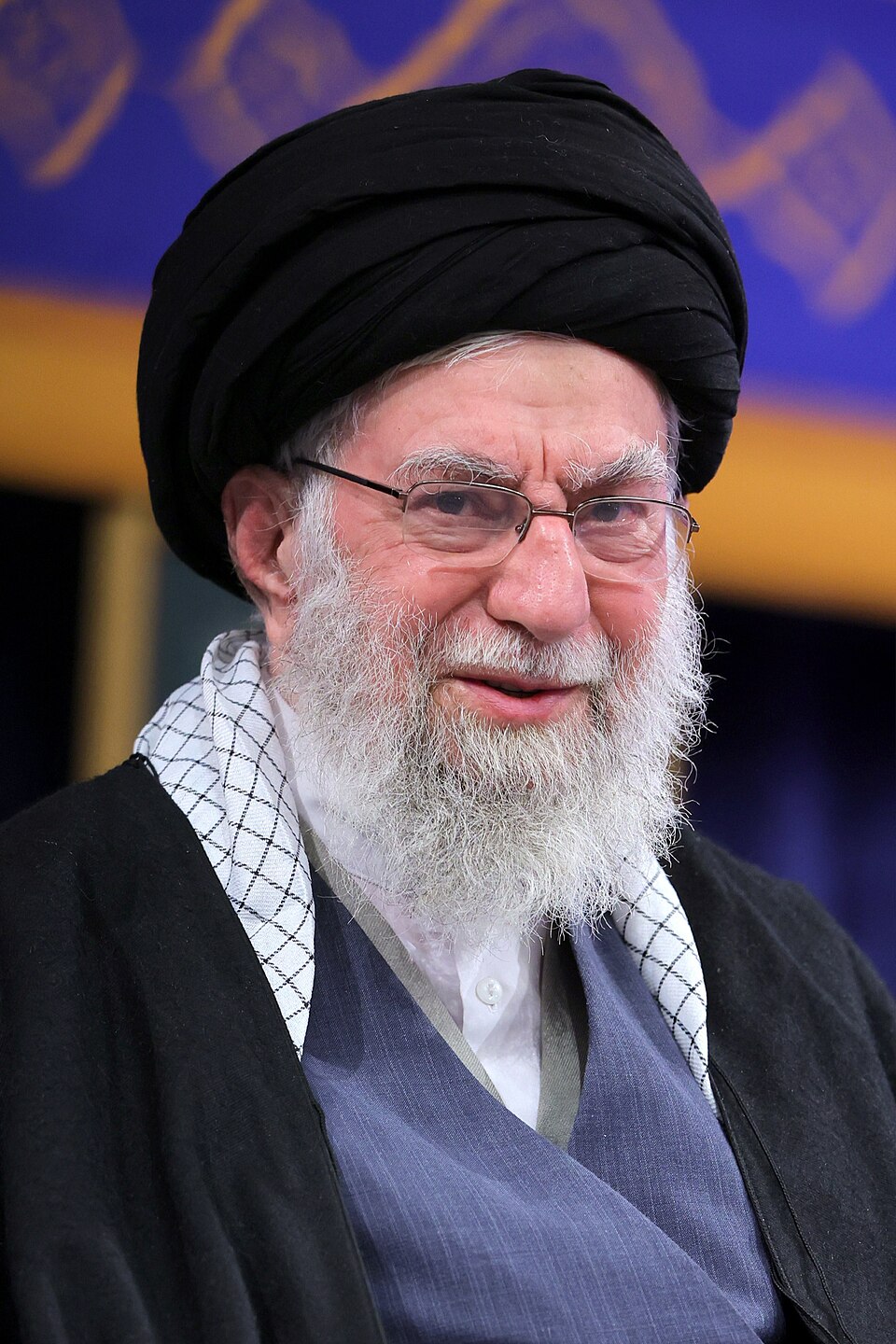
The Middle East and indeed the world are grappling with a seismic shift following reports confirming the death of Ayatollah Ali Khamenei, Iran's Supreme Leader. After decades at the helm of the Islamic Republic, Khamenei's passing, reportedly as a direct consequence of a coordinated United States and Israeli attack on Iranian soil, marks the end of an era and ushers in a period of profound uncertainty. The news, initially disseminated by an Israeli source to Reuters and later officially confirmed by Iranian state media like the Islamic Republic News Agency (Irna), has sent shockwaves across geopolitical landscapes, intensifying an already volatile regional dynamic. This pivotal event not only signifies a monumental loss for Iran but also raises critical questions about the future trajectory of its domestic and foreign policies, and the stability of a region perpetually on the brink.
The Coordinated Strike and Its Devastating Aftermath
The morning of Saturday (28) brought a terrifying reality to Iran. A coordinated military operation by the United States and Israel targeted various locations across the country, including the capital Tehran and several other cities. According to Iranian press, citing the Red Crescent humanitarian network, the attacks were devastating, resulting in over 201 fatalities and injuring 747 people. Israeli Prime Minister Benjamin Netanyahu claimed that Israeli forces, in coordination with the US, specifically targeted and destroyed Khamenei's complex.
In immediate and fierce retaliation, Iran launched a barrage of missiles towards Israel and initiated attacks on American military bases situated throughout the Middle East. While Iranian reports detailed significant damage and casualties from the initial US-Israel strike, the United States Army confirmed that no American military personnel were injured in the subsequent Iranian retaliation, describing the damage to their bases as "minimal." This exchange of fire underscores the extremely high stakes and the perilous tit-for-tat dynamic that characterizes the long-standing animosity between these powers. The conflict between the US and Iran stretches back decades, marked by periods of overt confrontation and covert operations, with occasional moments of fragile calm proving to be merely superficial. This latest escalation, directly impacting the highest authority in Iran, undoubtedly represents one of the most significant chapters in this tense history.
A Legacy Forged in Revolution: Who Was Ali Khamenei?
Ayatollah Ali Khamenei, who passed away at 86, was far more than just a political figure; he was the spiritual and temporal guardian of the Islamic Revolution, holding the titles of Supreme Leader, Head of State, and Commander-in-Chief of Iran's Armed Forces. His tenure, spanning over three decades, made him the longest-serving leader in the Middle East and the second-longest-serving head of Iran in the 20th century, surpassed only by Shah Mohammed Reza Pahlavi.
For Iranians, particularly his supporters, Khamenei was an embodiment of unwavering faith, jihad, and resistance against perceived global injustices and foreign interference. The Iranian government, in its official declaration of 40 days of mourning and a seven-day national holiday, hailed him as a "martyr," brutally taken by the "criminal government of the United States and the malicious Zionist regime [Israel]." They celebrated his leadership as a new chapter in Islamic governance, guiding the nation against "disbelief, tyranny, and arrogance." Khamenei's immense influence and intellectual depth were often compared to the Grand Ayatollah Ruhollah Khomeini, the founder of the Islamic Republic, with official statements suggesting he would forever be remembered alongside Khomeini in the hearts of nations worldwide. His reported attributes included profound religious knowledge, strategic vision, unwavering will, and unparalleled courage. His death leaves an immense void in Iran's political and spiritual landscape, one that will test the resilience and continuity of the Islamic Republic. For deeper insights into the leader's demise, consider reading
Ali Khamenei Dead: End of an Era for Iran's Supreme Leader.
The Immediate Impact and Future Implications
The immediate aftermath of Khamenei's death is marked by a period of national mourning and official condemnation. Iran's state media reported his martyrdom while "fulfilling his designated duties and present at his workplace," painting a picture of a leader dedicated to his nation until his final moments. This narrative of martyrdom is crucial for consolidating support domestically and framing the event as an act of aggression against the entire nation.
The critical question now turns to succession. The Islamic Republic has established mechanisms for choosing a new Supreme Leader, typically through the Assembly of Experts. However, the timing and circumstances of Khamenei's death introduce an unprecedented layer of complexity and potential for instability. The transition period will be closely watched by regional and international actors for any signs of internal power struggles or shifts in Iran's strategic direction. The core ideological tenets of the revolution and the continuity of the state will be paramount. In this tumultuous period, the continuity of the revolution, a bedrock principle, ensures that even with the passing of a supreme leader, the path forward for Iran remains *salvo* – secure and guided by its institutional frameworks. The state's ability to maintain cohesion and project a unified front will be crucial, demonstrating that the `líder irã salvo` (Iran leader saved) through its enduring revolutionary principles.
*
Geopolitical Ramifications: This event could significantly escalate tensions in the Middle East. Regional proxies, already engaged in various conflicts, might intensify their actions. The relationship between Iran and global powers, particularly the US, UK, and EU, is likely to become even more fraught.
*
Economic Impact: Global energy markets will undoubtedly react to this news. Any perceived instability in a major oil-producing region could lead to price volatility. International trade and investment in the region may also be affected.
*
Regional Stability: Neighboring countries, already wary of Iran's influence, will be on high alert. The potential for a wider regional conflict cannot be dismissed, necessitating urgent diplomatic efforts to de-escalate.
*
Succession Watch: The process of selecting a new Supreme Leader will be highly scrutinized. Key figures within Iran's religious and political elite will jockey for influence, and the chosen successor's ideological leanings could dictate Iran's future foreign policy and domestic reforms.
Practical Tip: Businesses with operations or investments in the Middle East should reassess their risk exposure and contingency plans. International travelers are advised to monitor travel advisories closely. Diplomacy will be key in the coming weeks and months, and understanding the nuances of the internal Iranian transition will be vital for global leaders. For more on the official Iranian perspective, refer to
Khamenei Martyred: Iran Accuses US, Israel of Leader's Death.
Conclusion
The death of Ayatollah Ali Khamenei after a US-Israel attack is a moment of profound historical significance, casting a long shadow over the future of Iran and the broader Middle East. His passing, under such dramatic circumstances, ignites a fuse of uncertainty in a region already simmering with conflicts. While Iran mourns its fallen leader, it also faces the daunting task of navigating a succession that will define its next chapter. The world watches anxiously, hoping that the institutional strength designed to keep the `líder irã salvo` through continuity can prevail, and that cooler heads will ultimately prevent further escalation in what is arguably one of the most critical geopolitical flashpoints of our time. The legacy of Khamenei, intertwined with the destiny of the Islamic Revolution, will undoubtedly continue to shape regional and international affairs for years to come.